OutSystems
Enterprise low-code platform for building and running business-critical apps
OutSystems is an enterprise low-code platform where IT teams build, deploy and run web and mobile apps with AI assistance.
Overview
OutSystems review
This OutSystems review covers what the low code platform is used for, its key features, OutSystems pricing, the move from OutSystems 11 to OutSystems Developer Cloud, where it shines and falls short, and how it compares with other enterprise tools. OutSystems offers one platform for full stack development: developers design the user interface, data models, business logic and integrations in a visual development environment, and the platform generates, deploys and runs the application. OutSystems targets professional developers inside IT departments rather than business users, and it is built for large enterprises, government agencies and regulated industries that need modern apps on top of legacy systems. The company was founded in 2001 by Paulo Rosado in Portugal, is headquartered in Boston, and has been led by CEO Woodson Martin since 2025, with Rosado as chairman.
What is OutSystems used for?
OutSystems is used for application development where speed matters but the app still has to meet enterprise security and scale requirements. Teams use it to create apps from business requirements with less development time than a hand-coded project, for web apps and mobile applications alike. Typical projects are customer portals, internal business apps, field-service and inspection apps, case management, onboarding and claims workflows, and replacements for aging custom applications. Because it connects to existing systems through REST, SOAP and SQL integrations, OutSystems is often the layer that puts modern apps in front of mainframes, ERPs and CRMs.
Customers named on the vendor site include Heineken, Bosch and Zurich. The common thread is complex business logic and business processes that change often: OutSystems lets a small team ship and update custom applications faster than a hand-coded stack, while IT keeps governance over data sources, security and lifecycle management.
Key features
- Visual development: model screens, data, logic and workflows in one visual development environment, with custom code (C# extensions or JavaScript) where the visual tools stop.
- Web and native mobile apps: build responsive web apps and native mobile applications for iOS and Android from the same project, with offline data sync, and manage applications of every type in one place.
- Integrations: connect to databases, SAP, the Salesforce platform and any REST or SOAP API, with pre built components from the OutSystems Forge, a library of pre built components shared by the community.
- AI capabilities: Mentor generates apps from natural language requirements and reviews code quality; Agent Workbench adds AI agents with enterprise guardrails, so teams can build AI agents into business processes; intelligent document processing extracts data from forms.
- Workflow automation: process automation with human tasks, timers and business rules for approvals and case handling.
- Team collaboration and lifecycle management: built-in version control, dependency analysis, one-click deployment across environments, monitoring and technical debt reports.
- Enterprise security: role-based access, single sign-on, audit logs and compliance options for regulated industries.
OutSystems pricing
OutSystems offers a free tier and a paid cloud platform, but no public tiered plans or price list. Its pricing and editions page (September 2026) lists two editions:
- Personal Edition: free, no credit card. Development runtime only, OutSystems Cloud hosting, up to 100 internal users, for learning and test applications, not production use.
- OutSystems Developer Cloud (ODC): priced per application, user and add-ons. It includes development, non-production and production runtimes, cloud hosting, a 99.5% uptime guarantee, ISO 27001, and starts with 100 internal users and one medium-sized production application. You contact sales for a quote.
Subscription cost depends on three things: application complexity measured in Application Objects (AOs), the number of named, non-anonymous end users, and add-ons. RapidDev, a development agency, reports an ODC entry price of about $36,300 a year and lists 24x7 support, extra runtimes, SOC 2 Type II, PCI DSS and self-hosting as extra cost add-ons (RapidDev review).
The cost surprise to check is Application Object growth. Every screen, entity and API method counts, so licensing costs rise as apps grow, and teams sometimes restructure architecture to stay under a tier. Ask for a quote based on your real app portfolio, and budget for training and certified developers, which are additional costs on top of the minimum price. Compliance add-ons and extra runtimes are extra cost as well.
OutSystems Developer Cloud vs OutSystems 11: which cloud platform?
OutSystems runs two generations of its development platform. OutSystems 11 (O11) is the long-standing version that supports deployment in the OutSystems cloud, a private cloud or on premises. For teams that must stay on premises, O11 remains the usual option; ODC is a managed cloud platform, and RapidDev lists self-hosting for it as a sales-gated add-on. OutSystems Developer Cloud is the cloud-native successor built on AWS and Kubernetes, and it is where new AI features land. Moving from O11 to ODC is a migration project, not an upgrade: RapidDev notes that O11 apps have to be rebuilt on ODC and that customers may pay for both during the transition. OutSystems documents migration patterns and an ODC guide for O11 developers. If you start today, start on ODC; if you run O11, plan the move as a project with its own budget.
Code ownership and lock-in
Lock-in is the most debated OutSystems topic. OutSystems does not use a proprietary runtime: according to its architecture evaluation guide, it generates standard .NET applications, and on OutSystems 11 you can detach the source code and keep running the apps without the platform. Some reviews say no code export exists at all; that is contradicted for O11 by the vendor's documentation. Detached code is generated code, though, so maintaining it by hand is a large job, and the detach option is documented for O11 rather than ODC. In practice, choosing OutSystems is a long-term platform decision.
Where OutSystems shines — and where it falls short
Strengths:
- Fast app development of complex logic and enterprise apps, with one development platform for web, mobile, logic and integrations.
- Strong governance, security and lifecycle management for regulated industries and government agencies.
- Deep integration with existing systems and legacy systems.
- AI assistance (Mentor, Agent Workbench) built into the platform.
Trade-offs:
- Expensive, with prices only by quote and Application Object pricing that is hard to forecast.
- A real learning curve: OutSystems developers are a specialized, often costly skill set, closer to software development than to no-code.
- The O11 to ODC migration is a rebuild for existing customers.
- Overkill for simple internal tools or small teams; lighter tools are cheaper.
How OutSystems compares
- Mendix: the closest enterprise low code rival, owned by Siemens, with stronger business-user tooling.
- Microsoft Power Apps: cheaper per user inside Microsoft 365, but less suited to large custom applications.
- Appian: process automation and case management first, with low-code apps on top.
- Pegasystems: decisioning and workflow automation for very large organizations.
- Oracle APEX: low-code apps built directly on Oracle Database.
- Retool: internal tools for developers at a far lower entry price.
- Betty Blocks: enterprise no-code with flat platform pricing.
Is OutSystems worth it?
OutSystems is worth it for large enterprises that run application development at scale, build many mission critical systems and custom applications, need enterprise features such as security and governance, and have the budget for licensing and trained developers. Developer productivity gains are real when the app portfolio is big enough to spread the cost. It is the wrong choice for small teams, simple internal tools or tight budgets, where Power Apps, Retool or a no-code builder deliver more for less. Evaluate alternatives with a proof of concept and a quote based on your real application complexity. If you want help with an OutSystems project, the low-code agencies and developers on LowCodeDevs can scope it.
Sources
- OutSystems pricing and editions: Personal Edition, ODC and the pricing model.
- Standard architecture with no lock-in, OutSystems: generated .NET code and detaching.
- ODC for O11 developers, OutSystems: differences between the two platforms.
- OutSystems Review, RapidDev: ODC entry price, add-ons and migration (its claim that no code export exists at all is contradicted for O11 by OutSystems' documentation).
- OutSystems low code guide, Net Solutions: features and use cases.
- OutSystems alternatives, Launchpad: a list of alternatives.
- OutSystems, Wikipedia: company history.
No reviews yet — write the first one.
At a glance
- Website
- https://outsystems.com
- Category
- App builders · Web apps
- Updated
 Adalo
Adalo AppSheet
 Appsmith
 Bubble
 Caspio
 Claris FileMaker
Questions
OutSystems FAQ
How much does OutSystems cost?
OutSystems does not publish prices. ODC is quoted per application, user and add-ons; a development agency reports an entry price of about $36,300 a year. The Personal Edition is free for learning.
Is OutSystems free to use?
Only the Personal Edition is free. It includes a development runtime and up to 100 internal users for learning and testing, but not production apps.
Is OutSystems a low-code platform?
Yes. OutSystems is an enterprise low code platform for professional developers, combining visual development with custom code where needed.
What is OutSystems used for?
Customer portals, internal business apps, mobile field apps, workflow automation and modernizing legacy systems in large organizations.
What are the drawbacks of OutSystems?
High and hard-to-predict cost, a specialized learning curve, a costly migration from OutSystems 11 to ODC, and long-term dependence on the platform.
Who owns OutSystems?
OutSystems is a privately held company founded in Portugal in 2001 by Paulo Rosado, with investors including KKR, Goldman Sachs, Abdiel Capital and Tiger Global. It is headquartered in Boston.
Who are OutSystems' main competitors?
Mendix, Microsoft Power Apps, Appian, Pegasystems and Oracle APEX are the most common alternatives for enterprise low-code.
From the blog
Guides featuring OutSystems
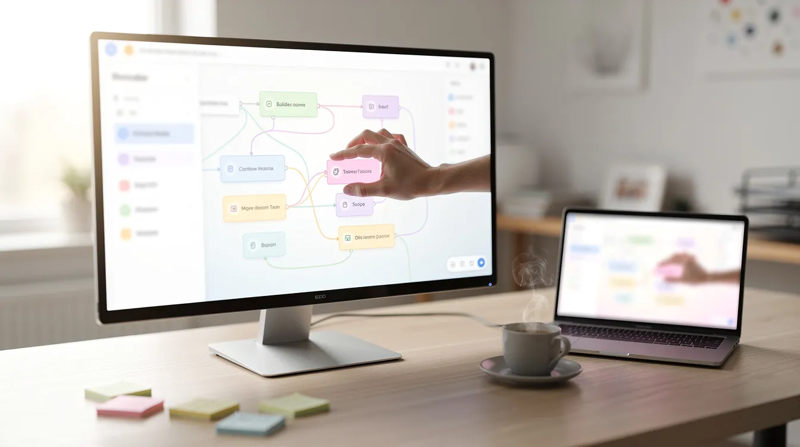
Best Low Code Platforms for 2026: Top Picks, Use Cases & How to Choose
Nine low code platforms ranked by fit rather than brand size, with what each is best for, where it falls short, and how to choose one for internal tools, portals and workflow automation.

Low Code, No Code, High Code: A Practical Map for Modern Application Development
Our vision of no code, low code, and custom code for software application development (high-code). The goal is simple: help you understand the full spectrum so your team picks the right approach for each project, every time.

Low-Code Enterprise Adoption in 2025: From Experiments to Core Strategy
Three years ago, most enterprises treated low-code as a sandbox for internal dashboards and request forms. By 2025, that sandbox has become the foundation of enterprise application development. Low-code and no-code technologies have become core operational strategies for modern enterprises, powering everything from supply chain management to customer-facing portals.
Elsewhere on LowCodeDevs
Recent projects on LowCodeDevs
No OutSystems case study has been published yet.
 WordPress
Trusted partners
Agencies that work with OutSystems
 OutSystems

Elsewhere on LowCodeDevs
Developers on LowCodeDevs
No developer has listed OutSystems as a skill yet.

 n8n
n8nYour expertise
Be the first OutSystems expert on LowCodeDevs
Teams choosing OutSystems land on this page looking for someone who can build with it. Nobody has taken that spot yet — list your agency or your own profile with OutSystems among your tools, and this page shows your work.
Free & without obligation
Talk to OutSystems experts
Tell us what you're building and vetted OutSystems agencies and developers get in touch — free and without obligation.